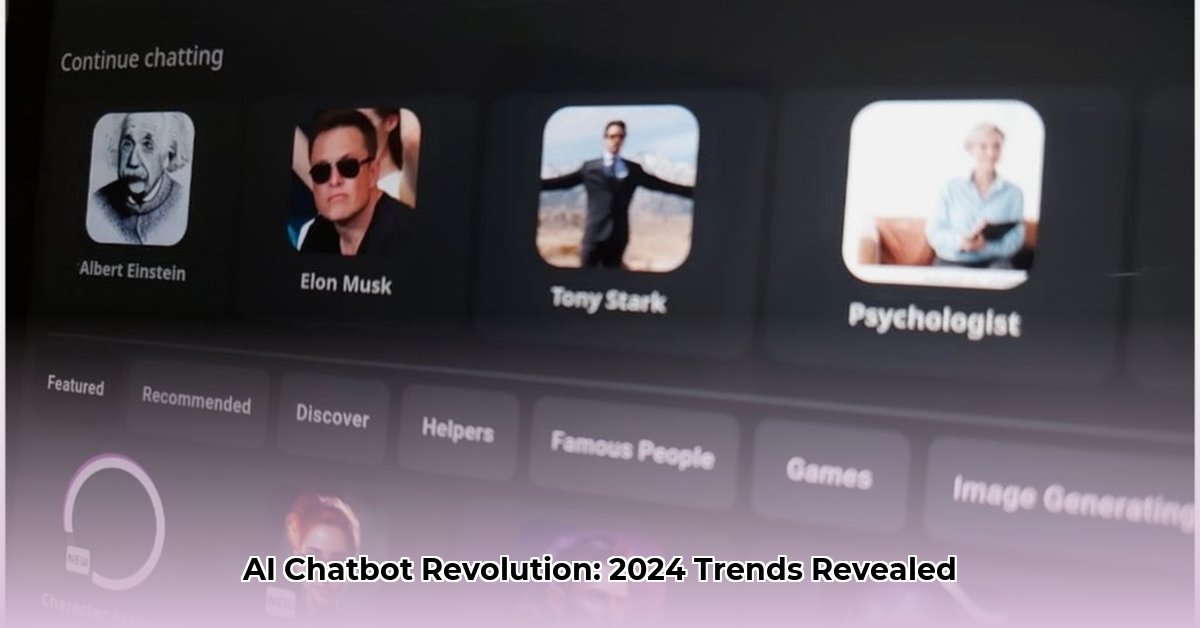
Mate AI APK and the 2024 AI Chatbot Revolution
The AI chatbot market is experiencing explosive growth. Applications like Mate AI APK represent a significant part of this burgeoning landscape. While specific data on Mate AI APK is unavailable for this analysis, examining broader trends reveals the key factors driving this technological revolution and its implications. This rapid advancement isn't merely a technological phenomenon; it's reshaping how we interact with technology, conduct business, and even envision the future of work. Isn't it fascinating to consider the scope of this transformation?
The AI Chatbot Explosion: Beyond the Buzzword
Gone are the days of rudimentary, robotic chatbots. Modern AI chatbots, powered by advancements in Natural Language Processing (NLP) (the ability of computers to understand, interpret, and generate human language), are engaging in increasingly natural and nuanced conversations. This enhanced capability expands their utility far beyond basic customer service applications. However, this rapid progress necessitates a critical examination of data privacy concerns, ethical implications, and potential impacts on the job market.
Key Trends Shaping the Future of Chatbots
Several significant trends are defining the AI chatbot landscape in 2024. It's crucial to remember that this is a dynamic field, and these trends are subject to constant evolution:
Market Expansion: The AI chatbot market is projected to experience substantial growth across multiple sectors, including healthcare, finance, and education. This widespread adoption indicates a broad acceptance of AI chatbots as valuable tools.
Enhanced Intelligence: Continuous improvements in NLP technology are leading to increasingly sophisticated and human-like chatbot interactions, bridging the gap between artificial and human communication.
Integration Challenges: Integrating chatbots seamlessly into existing business systems presents significant technical hurdles for companies seeking to leverage this technology effectively.
Increased Regulatory Scrutiny: Governments worldwide are increasingly focusing on the responsible development and deployment of AI chatbots, leading to the enactment of new regulations concerning data privacy and algorithmic fairness.
Demand for Transparency: Users are demanding greater transparency in how chatbots function and generate responses, fostering trust and acceptance of these technologies.
Navigating the AI Chatbot Landscape: Challenges and Opportunities
The AI chatbot revolution presents a double-edged sword, offering immense potential while posing significant challenges.
Challenges:
Data Privacy: Safeguarding user data is paramount. Breaches can lead to severe consequences, highlighting the crucial need for robust security measures.
Ethical Concerns: Addressing potential biases in AI algorithms and preventing misuse requires careful consideration and the development of appropriate safeguards.
Job Displacement: Automation invariably raises concerns about job displacement. While some jobs may be transformed, the overall impact on employment remains a subject of ongoing debate. "The emergence of AI chatbots might lead to a shift in job roles rather than widespread displacement," notes Dr. Anya Sharma, Professor of AI Ethics at Stanford University.
Opportunities:
Enhanced Customer Service: AI chatbots offer 24/7 support and instantaneous responses, improving customer satisfaction and efficiency.
Personalized Experiences: AI enables tailored interactions, resulting in more engaging and user-centric experiences.
Specialized Applications: AI chatbots are transforming various industries, providing specialized solutions and enhancing professional efficiency in healthcare, finance, and education.
The Competitive Landscape
The AI chatbot market is highly competitive, with numerous companies vying for dominance. While specific data for Mate AI APK is unavailable, the broader trend indicates a dynamic and rapidly evolving landscape.
Future Outlook: A Glimpse Ahead
The future of AI chatbots appears bright, but filled with complexities. Based on current trends, the following summarizes near-term and long-term prospects:
| Stakeholder Group | Short-Term Actions (Next Year) | Long-Term Actions (3-5 Years) |
|---|---|---|
| Developers | Enhancing user-friendliness, bolstering security protocols, and ensuring algorithmic fairness. | Developing chatbots capable of explaining their reasoning processes and adapting to evolving regulations and ethical dilemmas. |
| Businesses | Experimenting with customer service chatbots and measuring their Return on Investment (ROI). | Investing in personalized chatbot experiences while carefully considering the ethical implications of their applications. |
| Consumers | Prioritizing data privacy settings and opting for transparent chatbots. | Demanding increased chatbot accuracy and more seamless, personalized interactions. |
| Regulators | Establishing clear guidelines for responsible AI development and usage, including data privacy regulations. | Further developing regulations to ensure algorithmic fairness and accountability. |
The AI chatbot revolution is ongoing, offering both remarkable potential and considerable challenges. Continuous research into specific applications and their impact remains essential for gaining a comprehensive understanding of this transformative technology. Mate AI APK, and similar applications, are integral to this dynamic evolution, requiring ongoing evaluation and attention.
How to Improve AI Chatbot Security and User Privacy
The widespread adoption of AI chatbots necessitates a serious examination of security and privacy. Data breaches are a genuine risk, making robust security protocols crucial.
Addressing Security Risks
Threats to AI chatbot security include prompt injection attacks (manipulating prompts to extract information), API exploitation (compromising the chatbot's interface), and direct database attacks (data breaches).
Building Secure Chatbots
A comprehensive security approach requires multiple layers of protection:
Data Protection: Implement data encryption, strict access controls, and data minimization strategies.
Input Validation and Sanitization: Rigorously validate and sanitize user inputs to prevent malicious code injection.
Regular Penetration Testing: Conduct regular security audits (both automated and manual) to identify and address vulnerabilities.
AI-Driven Threat Detection: Employ AI-powered systems to proactively identify and respond to emerging threats.
Incident Response Planning: Develop a detailed plan to manage and mitigate security incidents. This includes clear steps for containment, eradication, and recovery.
Compliance and Ethics: Adhere to relevant regulations (GDPR, CCPA, HIPAA) and maintain transparency with users regarding data handling practices.
The security of AI chatbots is an ongoing concern, demanding a multi-pronged strategy that combines technical measures with ethical considerations and legal compliance. The combination of proactive measures and reactive approaches forms the crucial foundation for ensuring the responsible use of this powerful technology.
⭐⭐⭐⭐☆ (4.8)
Download via Link 1
Download via Link 2
Last updated: Sunday, May 04, 2025